

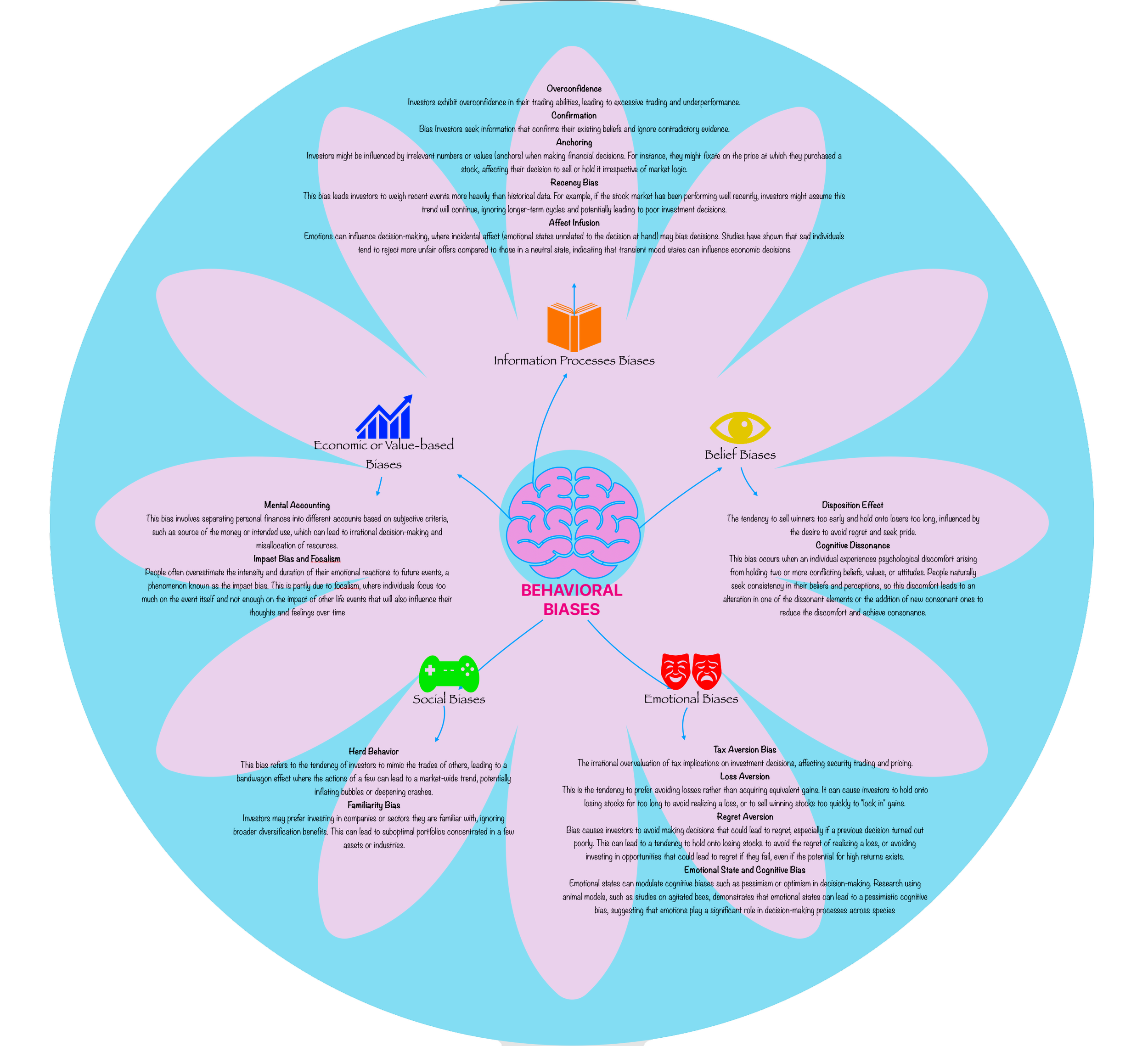
Most investors know what they should do. Buy low, sell high, diversify, stay the course. The information is everywhere. And yet the average retail investor still tends to underperform the index they are trying to beat.
The core issue is rarely a lack of information. It is the gap between what we know in theory and what we do under uncertainty, regret, loss, and social pressure.
Behavioral finance has spent decades mapping that gap. These are the 15 cognitive biases most likely to erode returns quietly, repeatedly, and often invisibly.
The 15 biases most likely to hurt returns
Bias 1
Confirmation Bias
Once you form a view on a stock, sector, or market trend, you start filtering evidence through that view. Supporting information feels convincing; contradicting evidence feels flawed.
Bias 2
Loss Aversion
The emotional pain of losses is stronger than the pleasure of equivalent gains. That asymmetry shapes what investors cut, what they hold, and when they freeze.
Bias 3
Overconfidence
Investors routinely overestimate their forecasting edge, timing ability, and risk awareness. It often shows up as concentration, excess trading, and false precision.
Bias 4
Recency Bias
Recent market action feels more informative than it really is. A rally feels like the start of something durable; a drawdown feels like the new normal.
Bias 5
Anchoring
Your brain grabs the first reference point it sees, like your entry price, a 52-week high, or an analyst target, and treats it as meaningful.
Bias 6
Disposition Effect
Investors often sell winners too early to feel good and hold losers too long to avoid crystallizing pain.
Bias 7
Herd Behavior
When everyone is buying, buying feels safe. When everyone is selling, selling feels necessary. Social proof leaks into market judgment fast.
Bias 8
Mental Accounting
People separate money into emotional buckets, such as savings, gains, or long-term capital, even though money is economically fungible.
Bias 9
Status Quo Bias
Doing nothing often feels neutral, even when inaction means staying in a poor allocation or an outdated position.
Bias 10
Narrative Fallacy
Humans trust stories more than statistics. Coherent explanations feel true even when they are mostly hindsight wrapped in confidence.
Bias 11
Availability Bias
The easier an example comes to mind, the more likely it feels. Fresh crashes and fresh rallies skew perceived probabilities.
Bias 12
Hindsight Bias
After the fact, market moves feel obvious. That false clarity makes investors overestimate forecasting ability and under-review bad decisions.
Bias 13
Sunk Cost Fallacy
Money, time, and ego already committed to a position create pressure to stay in it, even when the original thesis is broken.
Bias 14
Framing Effect
Equivalent information can trigger different reactions depending on how it is presented. A 6% failure rate and a 94% survival rate are not felt the same way.
Bias 15
Illusion of Control
More monitoring, more activity, and more intervention often feel like superior management, even when they reduce returns.
Why these biases are so difficult to catch
These biases operate in the processing layer, before conscious reasoning catches up. By the time you feel certain, the distortion may already be shaping what information seems credible, urgent, or emotionally tolerable.
That is why education alone is not enough. Knowing about confirmation bias does not stop you from filtering information. Understanding loss aversion does not make losses feel smaller.
What changes behavior is feedback. Investors need a system that surfaces recurring patterns across real decisions, not just a one-off questionnaire or abstract theory.
FinanSee App
What FinanSee Does With This
FinanSee tracks the behavioral signatures defined in its product taxonomy. Bias Lab highlights the measured patterns that keep recurring, Valora flags live decision signals, and the Decision Journal helps compare stated reasoning with real outcomes.
Explore FinanSee AppThis article is for informational purposes only and does not constitute financial advice. Always consider your own situation and consult a qualified professional before making investment decisions.